SpuffyWeb
Sadly Over-hyped
Mjeteconer
Just perfect...
Tyreece Hulme
One of the best movies of the year! Incredible from the beginning to the end.
Ariella Broughton
It is neither dumb nor smart enough to be fun, and spends way too much time with its boring human characters.
R. Ignacio Litardo
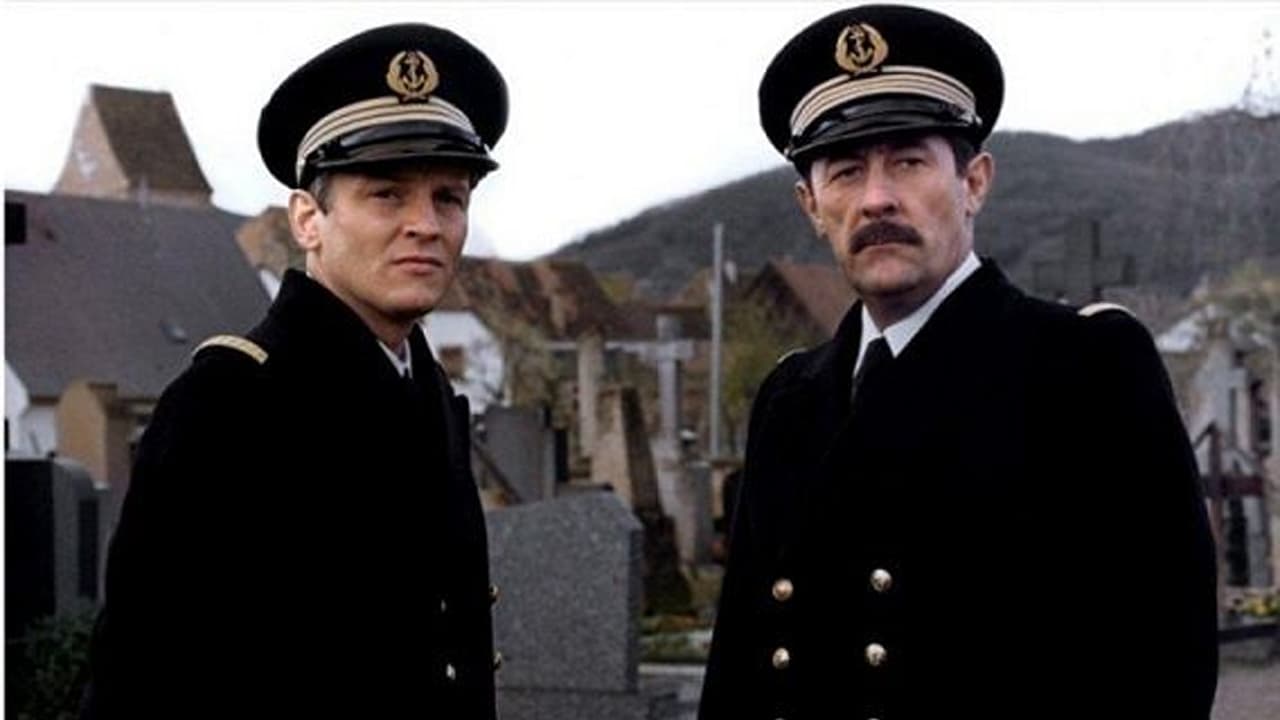
This film made me realize there are many things I am not good at. First, a mariner's life. Second, small towns & closed societies. Third, military life. Fourth, French films with too little dialogue :)? I was truly disappointed with this one. I understand there are "big philosophical issues" here, but sincerely, the only one I truly understood was the talent's parable (which we know since early childhood) and a mild idea of the "Heart of darkness", rightly induced by the mention of another of Conrad's novels, being read by the Captain.Yes, the images are fantastic. The sea that almost got frozen seemed unbelievable, and some close up takes of the ship made it even beautiful. But the "antropological" slant of the ship's life, machines, fishermen, sailor's "humour", "stories" and appeals to authority finally got on my nerves. Let alone Lt. Willsdorff! I suppose the mention of a military officer arrying a cat ALL the time would make any true one sneer. 'Le Crabe-Tambour' was totally lost in his own world. He showed his leadership with the Africans, when he made them win a battle. When was later made "general" he seemed, for the first time, to enjoy himself, not studying them like, say, an ethnographer. But it wasn't enough. "The meaning of silences"... Good for putting yourself to sleep.
knele
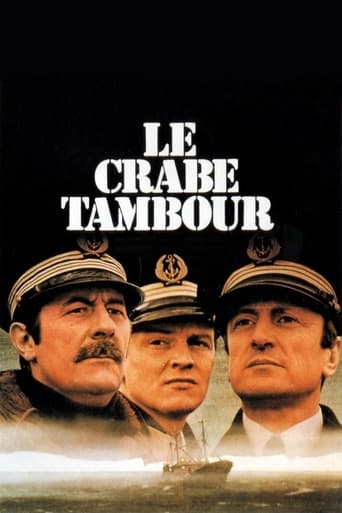
I saw this film five or six years ago after selecting it at random on the "French" shelf of my local video store. It made quite an impact on me, but I subsequently forgot the title and had to go to quite some lengths to relearn it.I wish I had the time and patience to write out my thoughts at length and with eloquence. Simply put, this feels like one of Joseph Conrad's sea novels, in particular "Lord Jim." It's gorgeously lit and shot -- in fact, I'd go so far as to call it a photographic masterpiece. Maybe the narrative unfolds a bit too slowly or bogs down here or there, but the film concludes beautifully and has haunted me ever since the one and only time I saw it. This may owe something to the casting of Jacques Perrin in the title role. For once here's someone with enough dash and je ne sais quois to justify an entire film spent in search of a supposedly legendary character. Even Brando somewhat disappointed in this regard in "Apolcaypse Now" (which, come to think of it, was very loosely based on Conrad).It's inexplicable to me that "Le Crabe-Tambour" has never had, and likely never will, much of a following. For my money, the French have never excelled at "classical" film-making in the key of Hollywood. Nor am I typically a fan of that kind of thing; however, this film is an exception in either case. I just picked up the VHS box on the shelf at the verysame video store last night, which is what prompted my comment. I think I'll rent it again tomorrow.
pascal henry
Movie is strongly architectured with flashbacks and could be understood at first as the story of a pure and almost mythical officer (Wilsdorf). At that level, it is just a good story. Much more interesting are the other characters (Doctor, Captain, Mechanical officer) that have been all fascinated by Wilsdorf. It is a deep human picture of all our weaknesses and dreams. Everybody may find some points in these lifes while Wilsdorf is more an abastract heroe. For French, debates about colonial period and fidelity is also interesting. On top of that, some scenes at sea are great (I checked on a sister ship during my military duty).
Gilles Tran
There are many war movies, but few movies about war. War movies are usually action movies set during a war. Other movies deal about war itself, why the people do it, why they enjoy it and suffer from it. Like Apocalypse Now or the Thin Red Line, The Crabe-Tambour is about war, though, unlike these movies, it shows little of it. It tells the story of Wilsdorf, a.k.a. the "Drummer-Crab", a French officer in the colonial armies, who witnessed (and took part in) the fall of the French empire after WWII. The man himself has become a legend and lives in the memories of fellow soldiers, who tell different tales - fantastic, ironic - about him. Wilsdorf appears as an elusive and shining ghost, a youthful figure of their past, who is still roaming the world as a free man while they grow old and embittered. Some may find there both a dubious fascination for the military (strongly reminiscent of Hugo Pratt's Corto Maltese series) and nostalgia for the colonies. However, it's so beautifully filmed that this can be easily forgiven.