Media scholar Herbert Schiller analyzes The New York Times, examining how its structure and content shape political and cultural narratives.
Joan Braderman critiques tabloid journalism through The National Enquirer, focusing on sensationalism and narrative construction
Stuart Ewen examines The New York Post, analyzing its presentation of morality, authority, and popular culture.
Economist Bill Tabb critiques economic reporting in U.S. News & World Report, focusing on how financial narratives are framed.
Poet Tuli Kupferberg analyzes Rolling Stone, examining its political positioning and cultural messaging.
Artist Martha Rosler critiques Vogue, focusing on consumer culture, gender roles, and advertising imagery.
Archie Singham examines Foreign Policy magazine, analyzing its perspectives on global power and elite networks.
Joel Kovel critiques Life magazine, exploring how it constructs narratives of American life and social reality.
Stanley Aronowitz analyzes labor coverage in The New York Times, focusing on representation of workers and unions.
Elayne Rapping examines romance novels, exploring their themes, audience, and cultural significance.
Richie Perez critiques the film Fort Apache, The Bronx, focusing on its portrayal of urban communities and policing.
Patty Zimmerman analyzes Variety, examining the film industry’s trade press and its framing of Hollywood.
Pearl Bowser explores early Black cinema through the work of Oscar Micheaux, examining its historical significance.
Renee Tajima critiques representations of Asian Americans in film, focusing on stereotypes such as Charlie Chan.
Marc Crispin Miller analyzes cigarette advertising, examining persuasive techniques and cultural messaging.
Jean Franco examines Mexican popular literature, analyzing gender roles and cultural narratives.
Flo Kennedy critiques U.S. media coverage of apartheid South Africa, focusing on omissions and framing.
Noam Chomsky analyzes The New York Times’ coverage of the Middle East, examining language and political framing.
Thulani Davis examines media coverage of racial violence, focusing on the Howard Beach incident.
Donna Haraway critiques National Geographic’s portrayal of primates, exploring scientific narratives and ideology.
Martha Rosler examines media coverage of a high-profile custody case, analyzing themes of commodification and morality.
Fred Landis analyzes The Washington Times, focusing on its ownership and ideological influence.
This program documents activist strategies combining protest and education to promote social change.
The film examines the development and dismantling of higher education programs within U.S. prisons.
Historians Howard Zinn and James Loewen critique the teaching of American history, focusing on omissions and narrative bias.
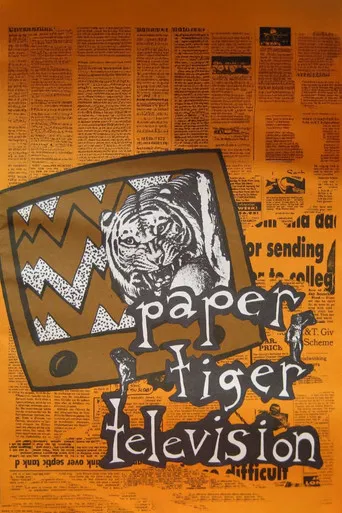
Paper Tiger Television is a public-access television series created in 1981 by a New York–based media collective led by DeeDee Halleck. Produced with a low-budget, do-it-yourself aesthetic, the series features artists, scholars, and activists critically examining mainstream media, often by analyzing newspapers, magazines, or television content on camera. Distributed through public-access channels and grassroots networks, the program became an influential example of alternative media, promoting media literacy and challenging corporate control of information.